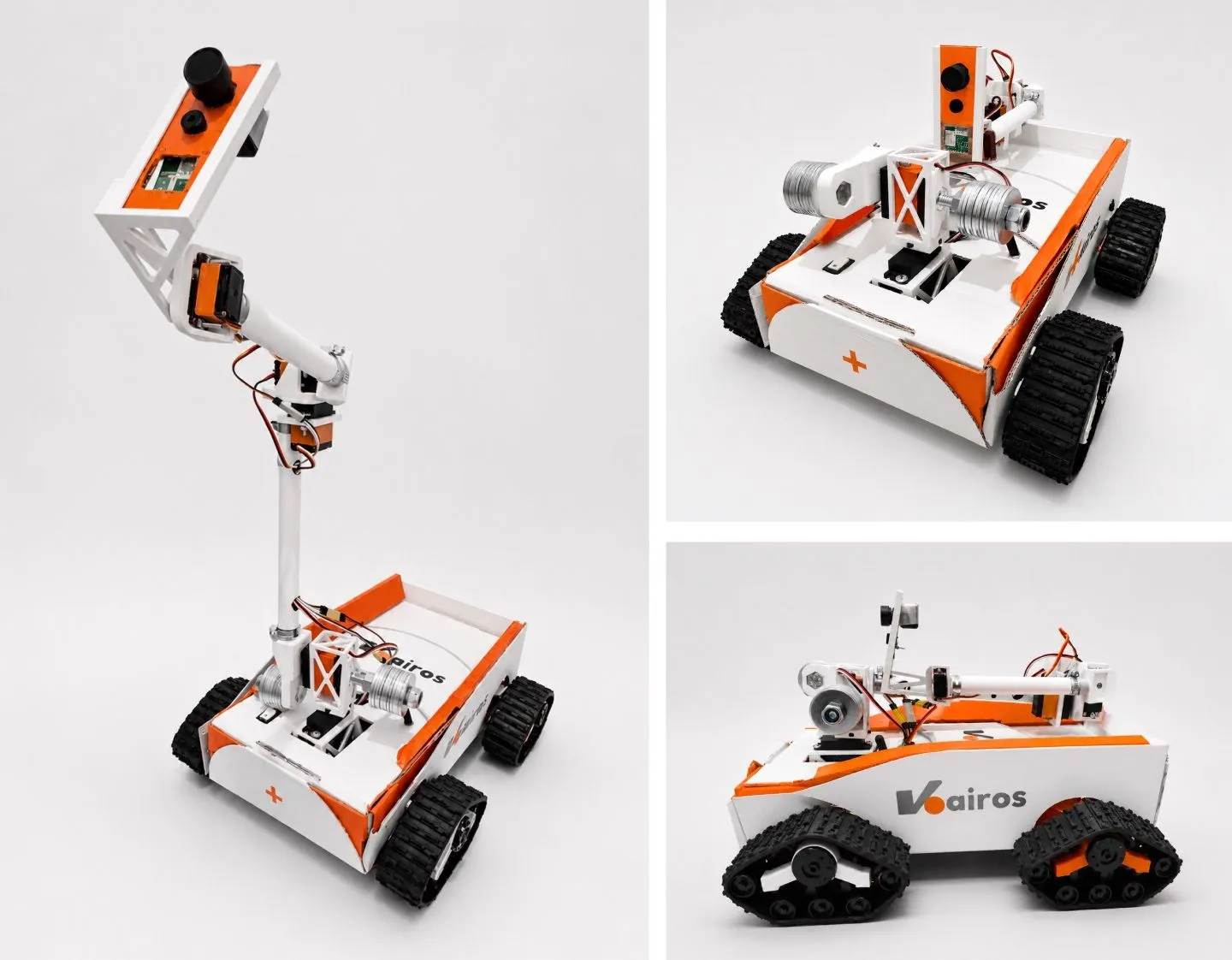
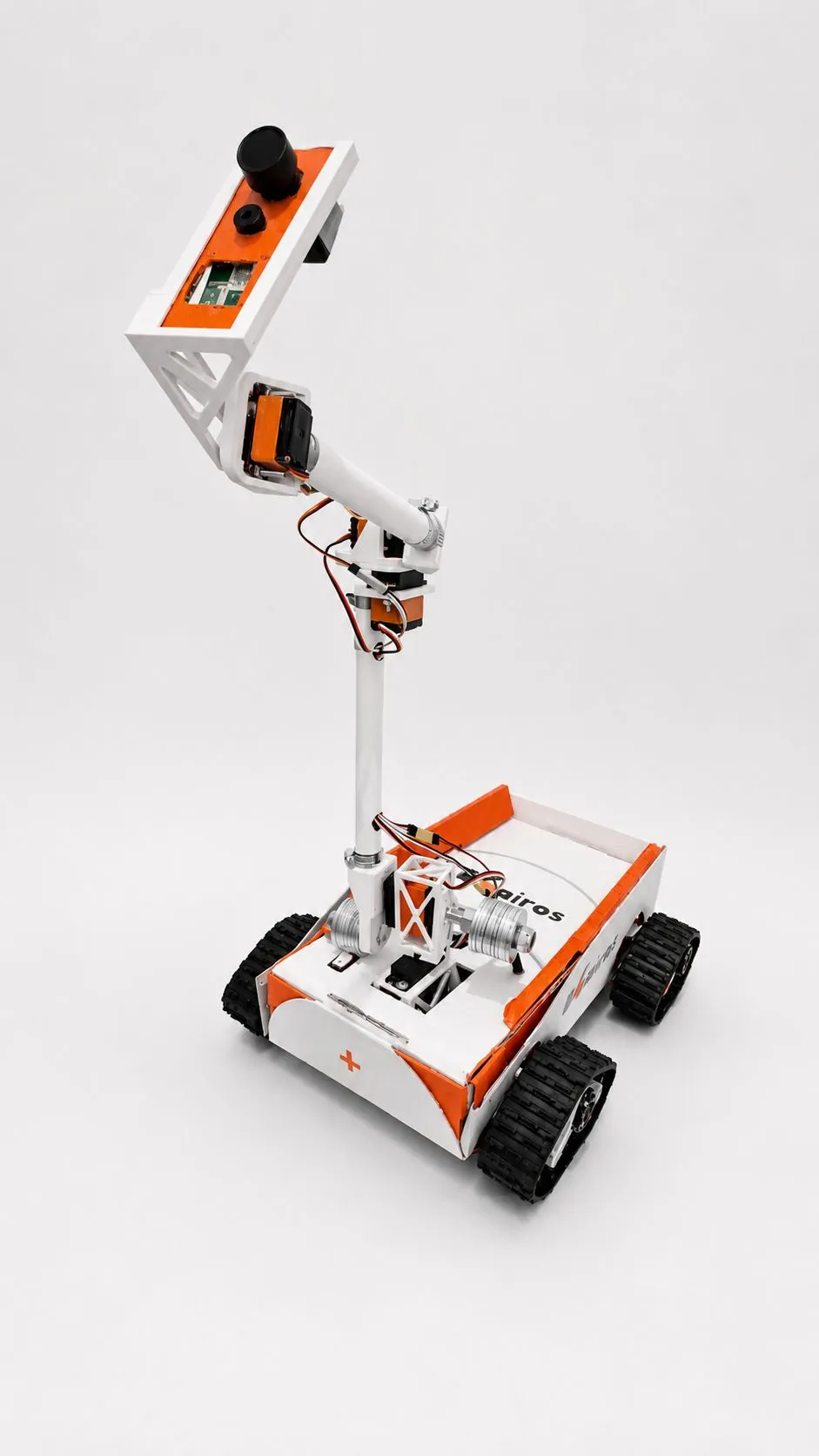
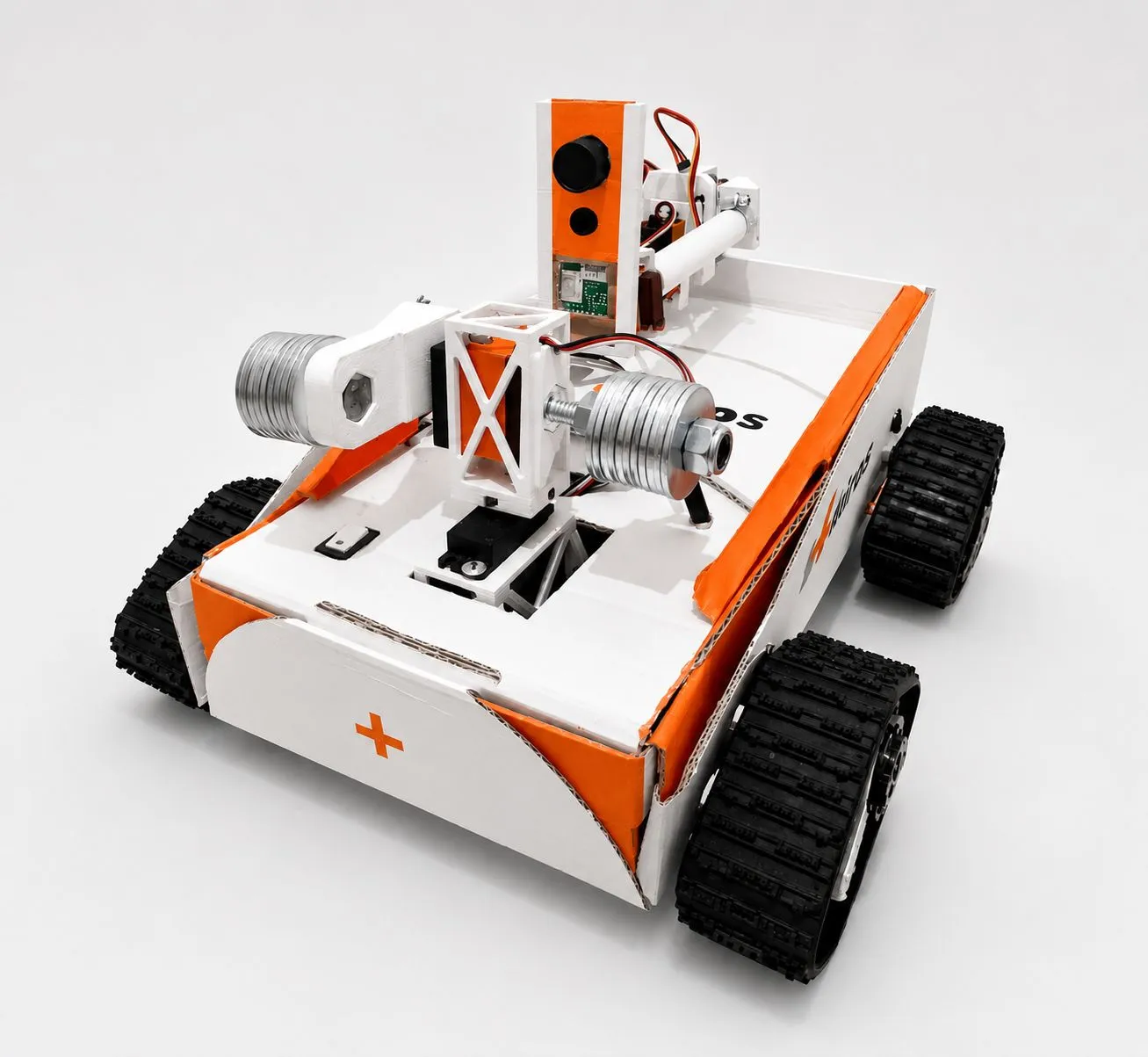
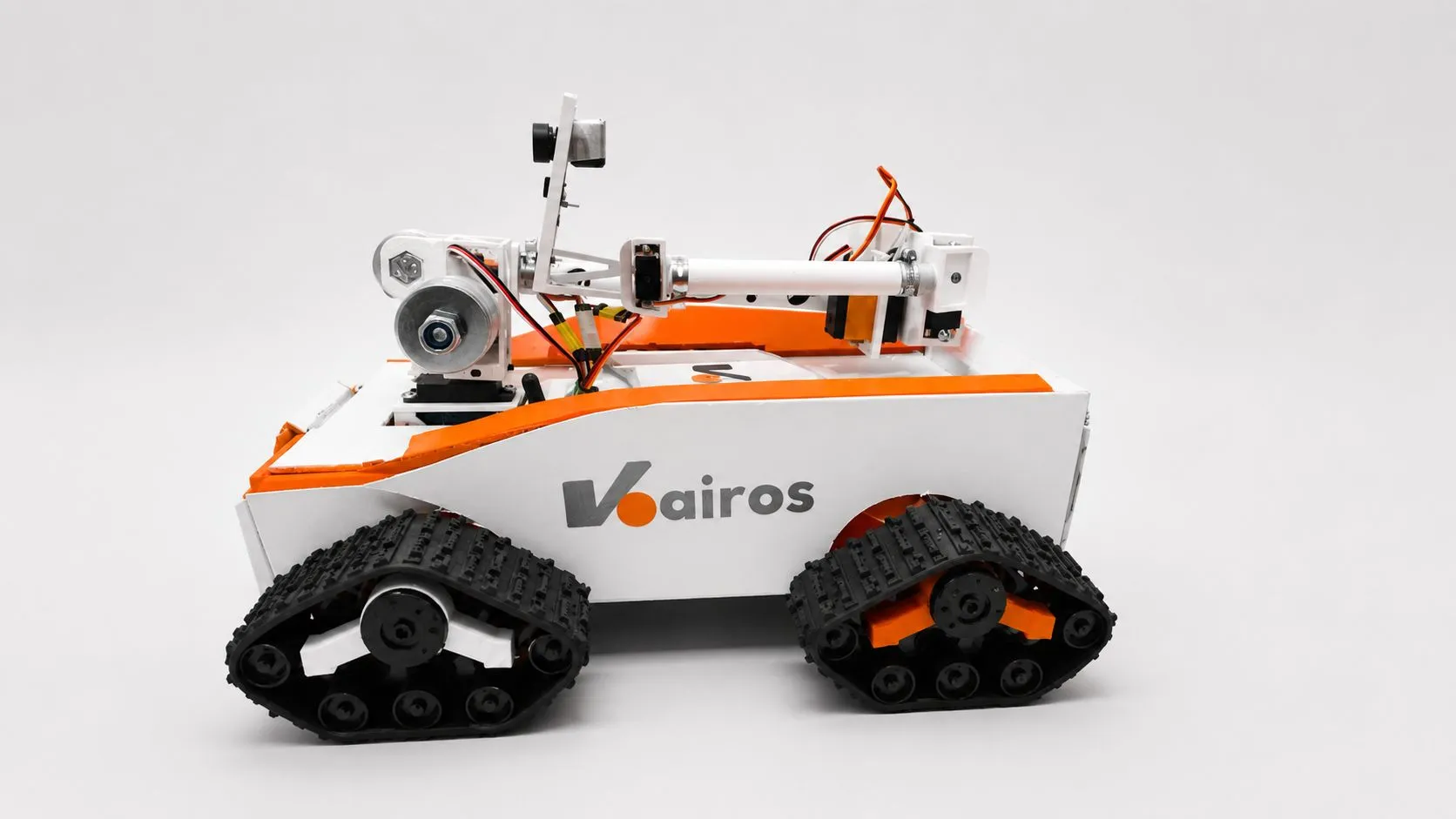
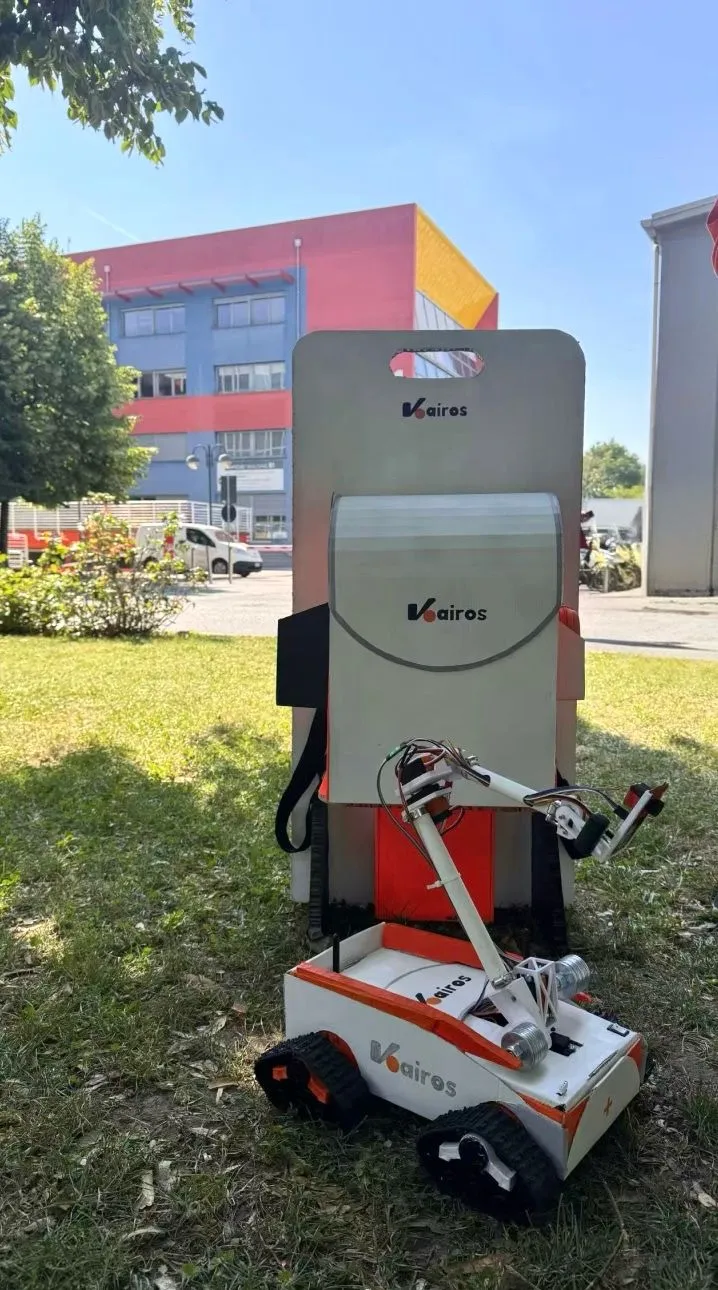
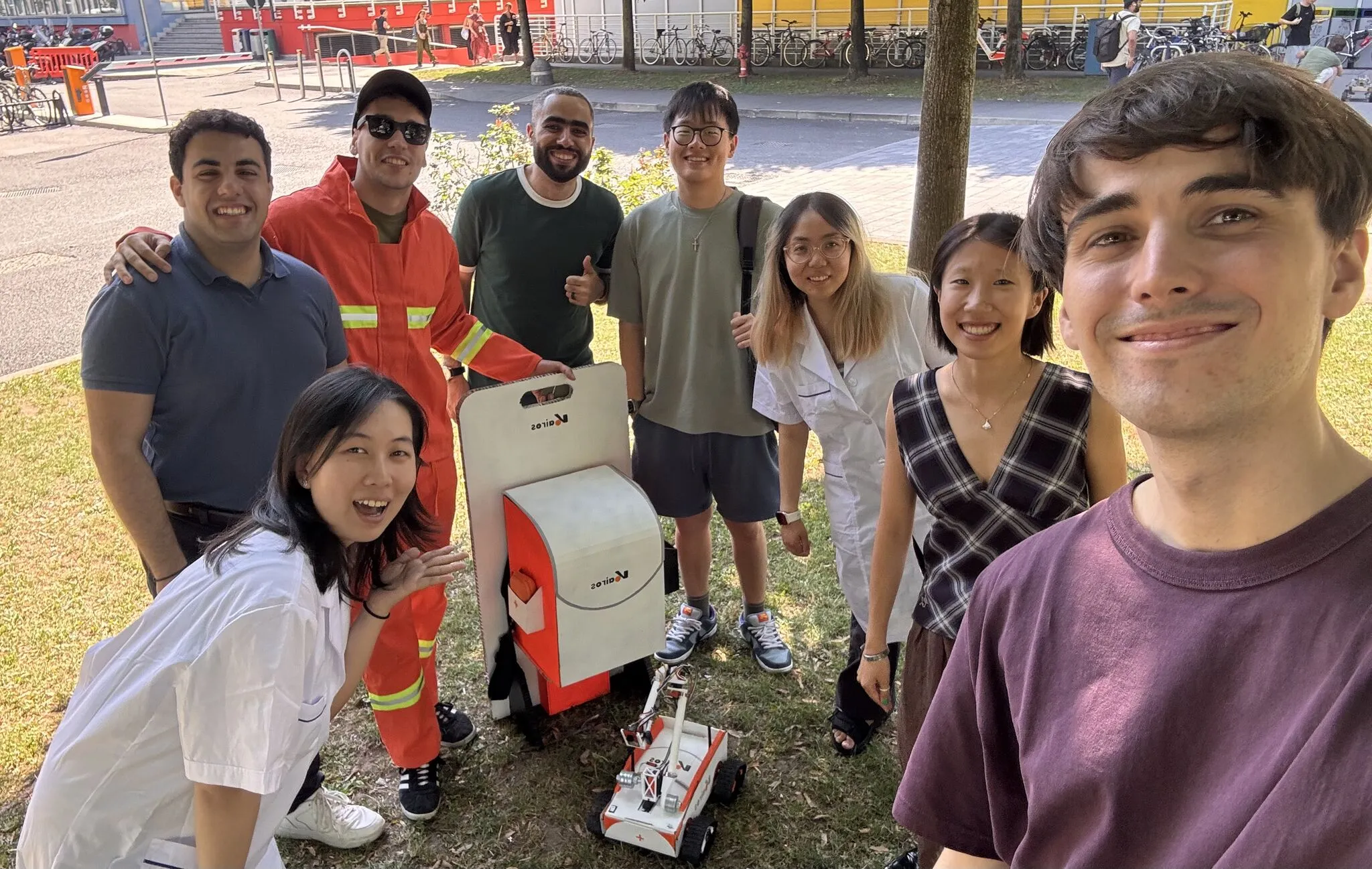
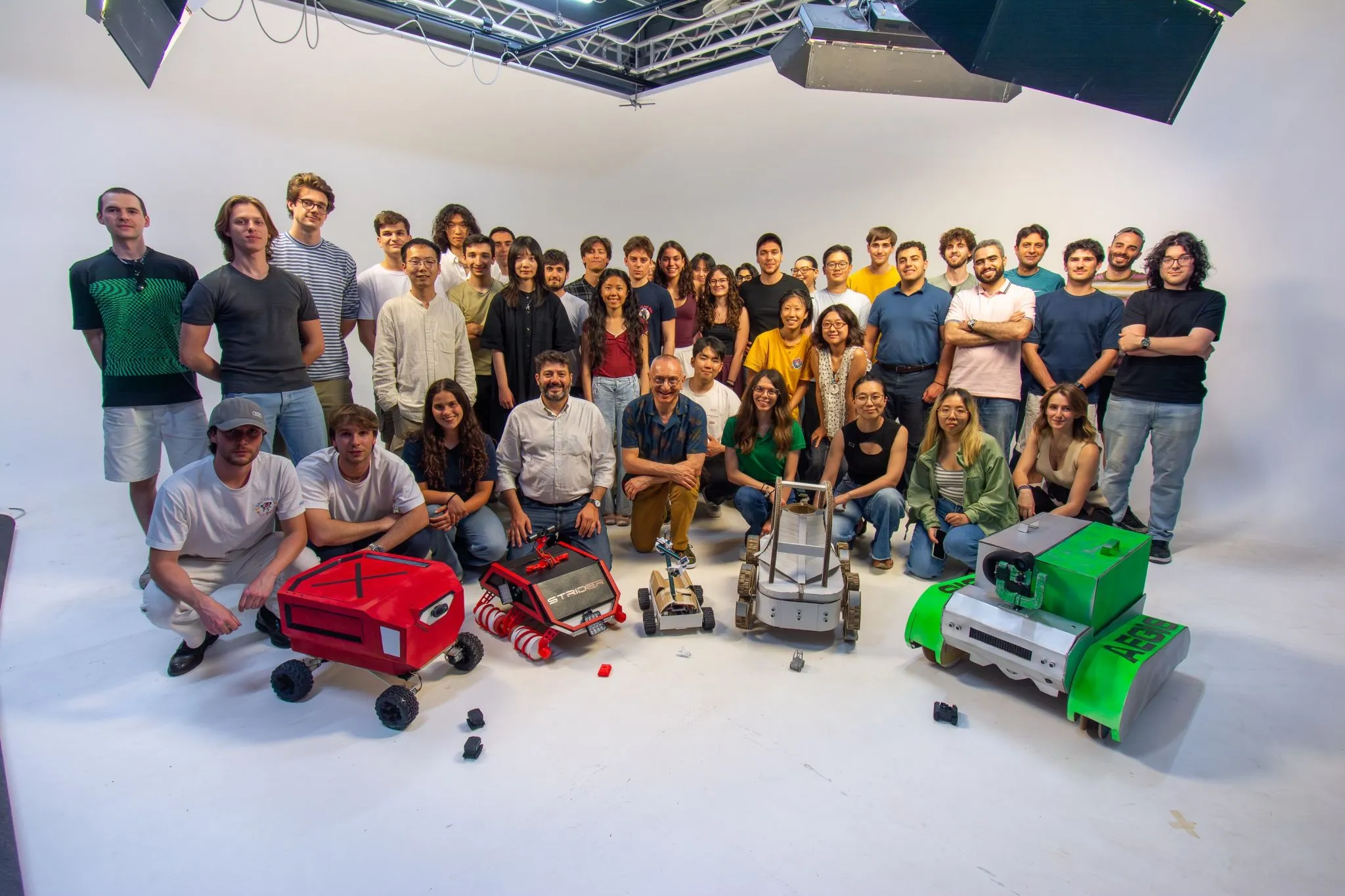
Kairos was built over three months in the spring of 2026 by a nine-person team of designers and engineers, for the 14th edition of the Design and Robotics course at Politecnico di Milano.
The problem
In earthquake rescue there is a gap between the moment a survivor is found and the moment a medic can reach them. During the Golden 72 Hours the people on site are often firefighters and local volunteers without medical training. They cannot tell who needs help first, and they risk causing secondary injuries during extraction. Kairos is named after the ancient Greek idea of the decisive moment, and it is built to act inside that window.
How it works
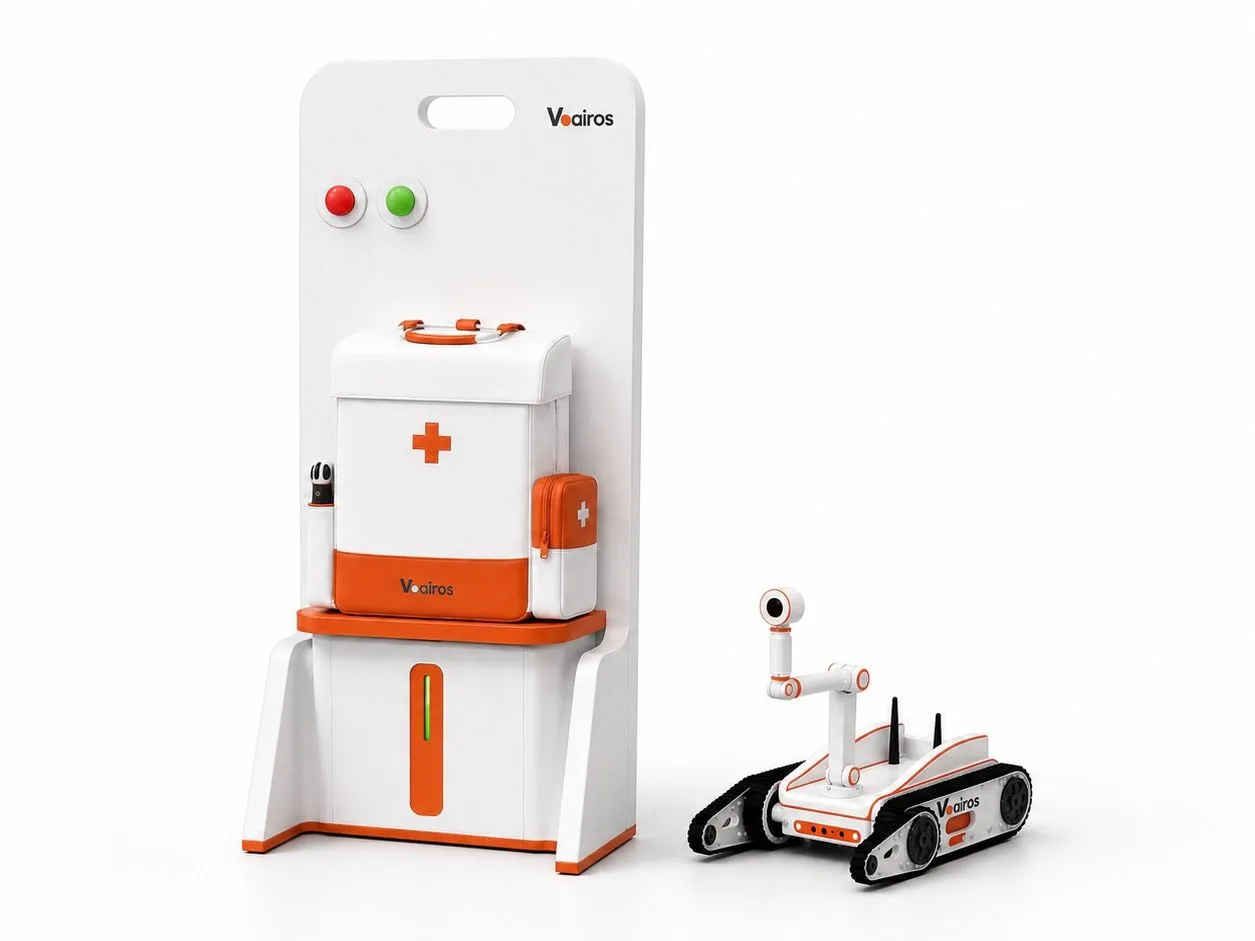
One person carries the kit to the site, deploys the robot and is guided step by step through an ABCDE assessment: Airway, Breathing, Circulation, Disability, Exposure. It is the sequence emergency medics already use, so the data arrives in a form they understand. Readings and live video go to a Medical Coordinator at a remote station, who sees every survivor’s status and priority in one view and sends instructions back to the rescuer.
The rule throughout: rescuers operate, AI assists, medical professionals decide. Kairos is a coordination tool, not an autonomous medical device.
Highlights
- Non-contact sensing. mmWave radar reads breathing and heart rate, an infrared thermometer reads body temperature, and a microphone and speaker handle voice prompts. Nothing touches the survivor.
- A five-axis sensor arm. Three segments in a 3:2:1 ratio give about 50 cm of reach. It went through six versions, from a cardboard mock-up to 3D-printed lattice links, then aluminium tubes cut from trekking poles with the cables routed inside, and finally adjustable counterweights to take load off the servos.
- A tracked cardboard chassis. A double-layer folded cardboard body, reinforced with 3D-printed brackets where the motors mount. Cheap enough to imagine deploying many robots at once and accepting that some will fail.
- No infrastructure needed. Wi-Fi and cellular cannot be assumed after an earthquake, so the robot is driven over LoRa at 433 MHz and streams video from an FPV camera on 5.8 GHz.
- Two-stage injury detection. YOLOv8 finds people in the frame, and a fine-tuned ResNet18 flags open wounds, visible blood, swelling and trapped limbs, mapped to triage priority levels. Inference runs at 5 fps alongside a 30 fps WebRTC stream.
- The software stack. Firmware on two ESP32-S3 boards, one for motion and one for audio and sensors. A FastAPI backend for video and inference, and a React web app the rescuer runs on a phone.
Where it stands
Kairos is a proof of concept: one rescuer, one robot, one survivor, tested in controlled conditions. The next steps are testing in simulated rubble, checking sensor accuracy in dust and low light, folding vital signs into the priority score, and having many robots report into a single dashboard.